
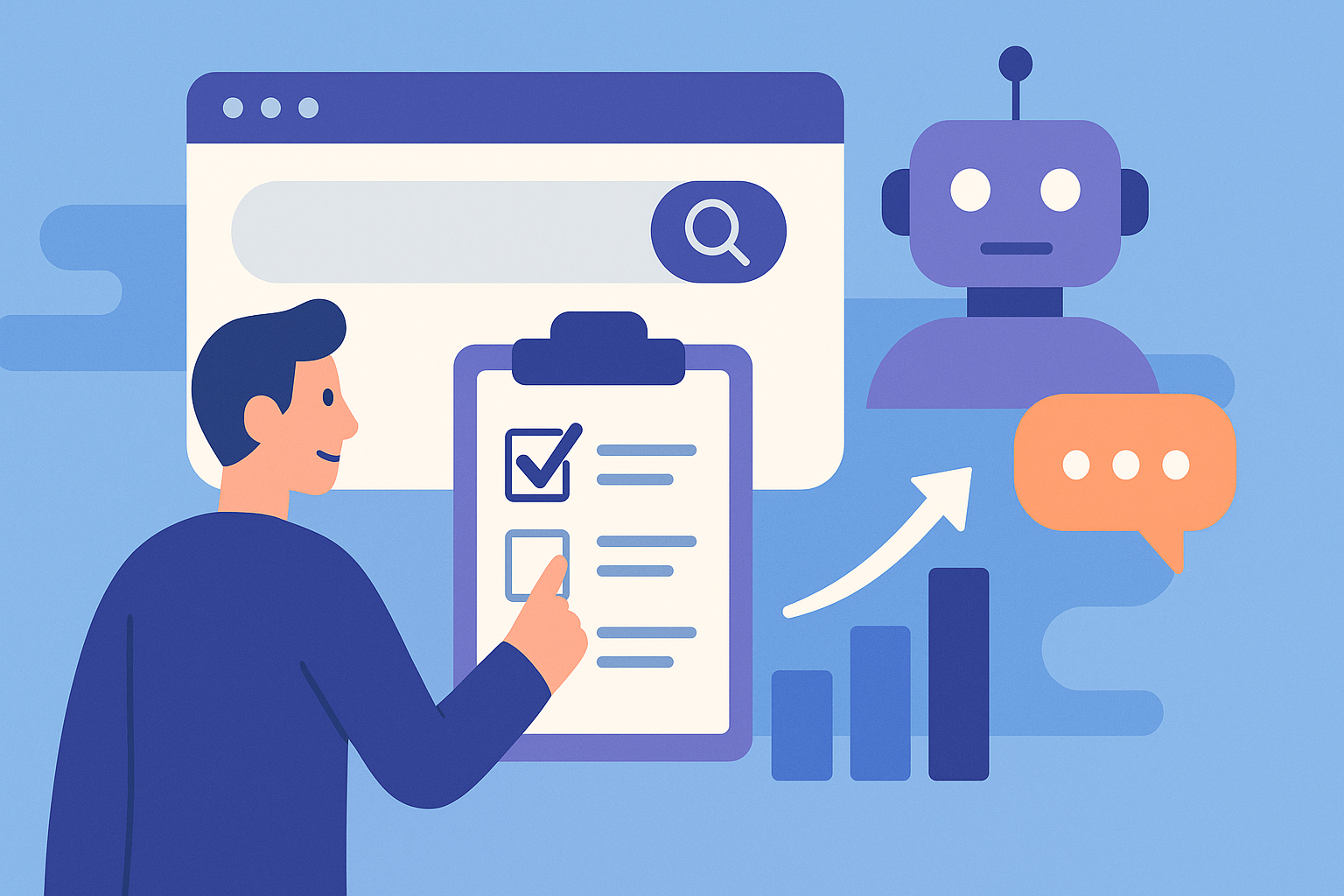
What AI Search Optimization Actually Means
AI search optimization is the work of making your content easy for ChatGPT, Perplexity, Google AI Overviews, and Gemini to find, understand, and quote. It splits into two related disciplines. Answer Engine Optimization (AEO) is about winning the direct answer slot, the kind of thing that used to just mean a featured snippet and now also means the boxed answer at the top of a Google search. Generative Engine Optimization (GEO) is broader: it is about how an AI system understands and represents your business at all, across every place it might encounter you, not just your website.
Neither one replaces standard SEO. They sit on top of it. If your technical SEO is weak, an AI model will struggle to crawl and parse your site in the first place, and none of the rest of this matters.
Why This Is Worth Doing Now
Google AI Overviews now show up on a large share of searches, and when they do, most users get their answer without clicking through to any website. ChatGPT alone fields tens of millions of queries a day, many of them the exact commercial-intent questions that used to land on a Google results page: "best [service] near me," "how much does [service] cost," "is [company] legit." If your business is not showing up inside those answers, you are invisible to a growing slice of buyers before they ever open a search engine tab.
The upside is that most competitors in most local service categories have not touched this yet. Getting even the basics right puts you ahead of a lot of the market.
There is also a practical business reason to care beyond raw traffic. A user who asks an AI assistant a commercial question and gets your business named in the answer arrives already pre-sold on you specifically, not comparing five blue links. That tends to convert differently than a cold click from a results page, because the AI has effectively already vouched for you before the person ever visits your site.
The Practical Checklist
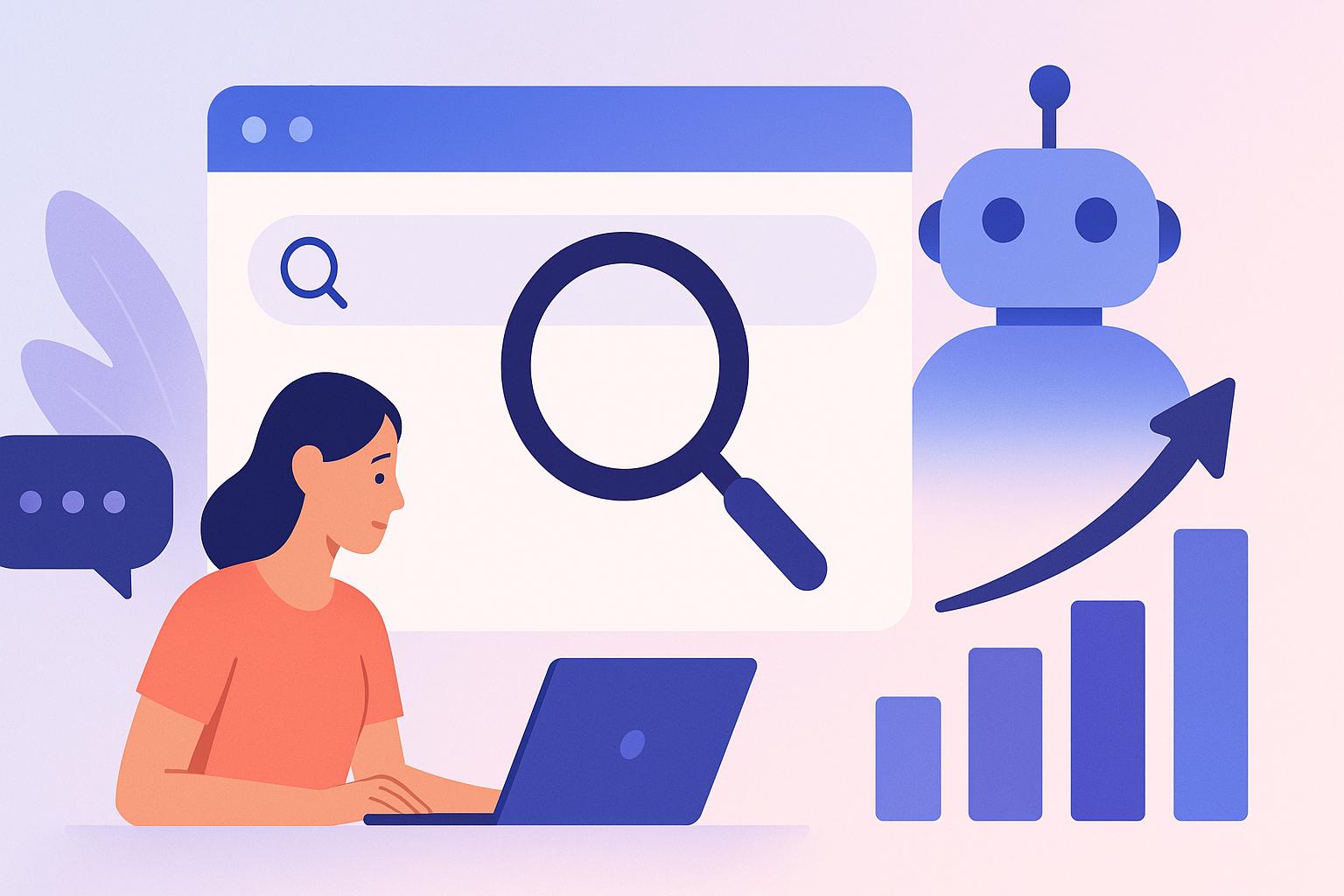
Here is the actual work, roughly in priority order.
1. Fix entity clarity first
AI systems need to know unambiguously who you are: business name, what you do, where you operate, and how to contact you, stated consistently everywhere you appear online. That means your website, Google Business Profile, directory listings, and social profiles should all use the same business name, address, and phone number. Inconsistency here is one of the most common reasons AI tools misidentify or skip a business entirely.
2. Write definitional ledes
Every important page, especially service pages and blog posts, should open with a direct, self-contained answer to the question the page exists to answer. Not a scene-setting intro paragraph, an actual answer in the first two or three sentences. This is the single highest-leverage change most sites can make, because it is exactly the kind of text AI systems lift into a generated answer.
3. Add real FAQ sections with schema
FAQ blocks with FAQPage structured data give AI systems a pre-packaged question-and-answer format they can extract cleanly. The questions should be phrased the way a real customer would type them, not the way a marketer would phrase a headline.
4. Use question-led headings
Structure content so section headings read like the queries people actually type: "How much does local SEO cost in [city]" rather than "Our Pricing." This does double duty for classic SEO snippets and AI answers.
5. Keep author names and dates visible
AI systems weigh trust signals, and a named author with a visible publish or update date is a basic one. Anonymous, undated content is easier for a model to deprioritize in favor of a source it can attribute and verify as current.
6. Do not skip the technical basics
Clean HTML, fast load times, and a working sitemap remain the foundation. You do not need a separate "AI version" of your site. You need one crawlable, well-structured site that both Google and AI crawlers can read without friction. On-page SEO fundamentals and local SEO signals still carry real weight here, especially for service businesses competing on "near me" queries. Our free on-page SEO checker is a fast way to confirm your sitemap, robots.txt, and meta tags are actually in order before an AI crawler tries to read them.
7. Earn genuine off-site mentions
AI systems form an impression of your business from more than your own website. Reviews, press mentions, directory listings, and other sites that reference you all feed into how confidently a model represents you. A business with a thin, one-dimensional online footprint gives an AI system less to work with than one that shows up consistently across review sites, local publications, and industry directories. This is slower to build than an on-site fix, but it compounds, and it is exactly the kind of signal digital PR and citation building were already doing for regular SEO long before GEO had a name.
Common Mistakes We See
The biggest one is treating GEO as a content trick rather than an accuracy and structure problem. Stuffing a page with keywords aimed at an AI model reads as noise to both the model and human readers. The second most common mistake is chasing AI visibility while ignoring the SEO basics that AI systems are themselves built on top of. A generative engine still has to crawl and index your site through largely the same infrastructure as a search engine, so a slow, poorly structured site loses on both fronts at once.
A third mistake is treating this as a one-time project. AI models get re-trained and re-indexed on a rolling basis, and your competitors are reading the same guides you are. What earns a citation this quarter can lose it to a competitor who tightens their own entity data and FAQ structure next quarter. Treat it as an ongoing part of your content and SEO work, not a checklist you complete once and forget.
The Local Angle Most Guides Skip
For a service business, GEO and local SEO overlap more than most general guides admit. When someone asks an AI assistant "best plumber in Austin" or "SEO agency in Los Angeles," the model is drawing on many of the same local signals Google's Map Pack already uses: consistent business information, real reviews, and locally relevant content. If you have already worked through our local SEO guide, you have a real head start on AI visibility in your market. If you have not, this is a good reason to start there before layering on anything more advanced.
How to Check If It Is Working
Ask ChatGPT, Perplexity, and Google directly the questions your customers would ask, phrased the way they would phrase them, and see whether your business shows up by name. Do this every few weeks and track the change. Perplexity and ChatGPT tend to reflect changes within days of a page being indexed. Google AI Overviews usually lag by several weeks because they depend on Google's own index catching up first.
Where This Fits Into a Real SEO Strategy
None of this replaces a solid content and technical foundation. At Marketivv, our GEO and AEO work always starts with an entity and structure audit before we touch a single line of content, because fixing a business's inconsistent NAP data or missing schema usually moves the needle faster than writing new pages. Combined with SEO content built around real search intent, that is what actually shows up when someone asks an AI assistant who to call.
Frequently Asked Questions
What is the difference between SEO, AEO, and GEO?
SEO optimizes for ranking position and clicks in traditional search results. AEO optimizes for winning the direct answer slot, like a featured snippet or voice search response. GEO is broader still: it focuses on how AI systems like ChatGPT and Gemini understand and represent your business across the internet, not just on your own site.
Do I need a separate website or content just for AI search?
No. A clean, well-structured, fast HTML site that AI crawlers can read is enough. The work is in structure and clarity, not building a parallel site.
How long does it take to show up in AI search results?
Perplexity and ChatGPT with browsing can reflect a newly indexed or updated page within days. Google AI Overviews typically take a few weeks longer because they depend on Google's core index updating first.
Does GEO replace traditional SEO?
No. GEO and AEO build on the same foundation as SEO: crawlable, well-structured, trustworthy content. A site with weak technical SEO or thin content will struggle in AI search just as much as it struggles in traditional search.
How do I know if my business is being cited by AI tools?
Ask the AI tools directly. Type the questions a real customer would ask into ChatGPT, Perplexity, and Google, using their exact phrasing, and check whether your business is named in the response. Repeat this periodically since AI answers change as content gets re-indexed.